Hey there! If you’re reading this, chances are you’re curious about how a mechanical water meter works. Well, you’re in the right place because I’m from a mechanical water meter supplier, and I’ve got all the info you need. Mechanical Water Meter
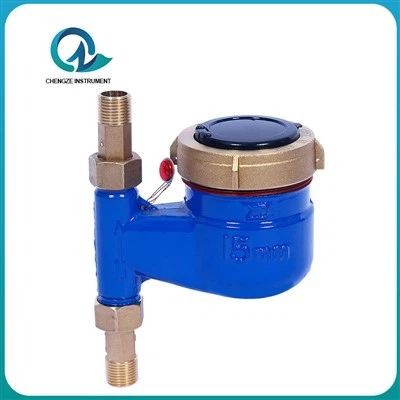
Let’s start with the basics. A mechanical water meter is a device that measures the amount of water flowing through a pipe. It’s a crucial tool for both water companies to bill customers accurately and for homeowners and businesses to keep track of their water usage.
The Core Components
First off, we’ve got the integral parts of a mechanical water meter. The main parts include the meter housing, the measuring chamber, the register, and the flow impeller.
The meter housing is like the shell of the meter. It’s usually made of sturdy materials like brass or plastic. This housing protects all the internal components from damage and environmental factors. You know, it has to withstand the pressure of the water flowing through the pipes, so it’s built tough.
Inside the housing is the measuring chamber. This is where the magic happens. The water enters through the inlet and fills up the measuring chamber. The size and shape of the chamber are designed very precisely to ensure accurate measurement of the water volume.
The flow impeller is another key part. It’s kind of like a little propeller that sits inside the water flow path. As water rushes through the chamber, it spins the impeller. The speed at which the impeller spins is directly related to the rate of water flow. Faster water flow means the impeller spins faster.
The register is what we see on the outside of the meter. It’s the display that shows how much water has passed through the meter. It usually consists of a series of dials or a digital screen. The spinning impeller is connected to a series of gears that transmit the motion to the register. Each rotation of the impeller and the subsequent movement of the gears are converted into a measurement of water volume, which is then displayed on the register.
How It Measures Different Water Flows
Now, water doesn’t always flow at the same speed. Sometimes, you’ve got a slow trickle, like when you’re just letting the faucet drip to prevent freezing in winter. Other times, you’ve got a high – volume flow, like when you’re filling up a big bathtub.
For low – flow situations, the mechanical water meter needs to be sensitive enough to detect even the slightest movement of water. The design of the impeller and the measuring chamber allows it to start spinning and registering water flow even with a very small amount of water passing through. The gears are also calibrated to accurately translate these slow rotations into the correct volume measurement on the register.
When it comes to high – flow situations, the meter has to handle the increased pressure and volume of water. The housing is built to withstand the higher pressure, and the impeller is engineered to spin at high speeds without getting damaged. The gears and the register mechanism are also designed to handle the rapid movement and accurately record large volumes of water flowing through in a short period.
Accuracy and Maintenance
Accuracy is super important for a water meter. After all, it’s what determines how much you pay for your water. Mechanical water meters are designed to be very accurate within a certain range of flow rates. They’re usually calibrated during the manufacturing process to ensure that they measure water volume as precisely as possible.
But, like any mechanical device, they do need some maintenance. Over time, sediment and debris in the water can build up inside the measuring chamber and on the impeller. This can slow down the impeller’s rotation and affect the accuracy of the measurement.
That’s why it’s a good idea to have your water meter checked regularly. We, as a mechanical water meter supplier, often recommend that water companies and customers have their meters inspected every few years. If there’s a lot of sediment in the water supply, more frequent inspections might be necessary. During an inspection, technicians can clean out any debris and make sure all the components are working properly.
Different Types of Mechanical Water Meters
There are a few different types of mechanical water meters out there. The most common ones are the single – jet and multi – jet water meters.
A single – jet water meter has one water jet that hits the impeller. It’s a simple design that’s cost – effective and suitable for measuring small to medium water flows, like in residential homes. The single jet creates a relatively straight – forward flow pattern that spins the impeller.
On the other hand, multi – jet water meters have multiple water jets that hit the impeller from different angles. This design allows for a more even and stable rotation of the impeller, which can lead to more accurate measurements, especially at higher flow rates. Multi – jet meters are often used in commercial and industrial settings where higher volumes of water are being used.
Another type is the positive displacement water meter. Instead of using an impeller, this type of meter measures water quantity by trapping a fixed volume of water in a chamber and then counting the number of times the chamber is filled and emptied. Positive displacement meters are very accurate, even at low flow rates, and are commonly used for measuring water usage in small apartments or areas where precise measurement of small volumes of water is needed.
Why Choose a Mechanical Water Meter
You might be wondering why not just use a digital water meter? Well, mechanical water meters have some real advantages.
First of all, they’re reliable. They don’t rely on electricity to work, so even during a power outage, they’ll still accurately measure your water usage. This is a big plus, especially in areas where power outages are common.
Secondly, they’re relatively simple in design. There are fewer components that can break down compared to digital meters. This means lower maintenance costs and a longer lifespan. You won’t have to worry about things like software glitches or sensor malfunctions that can sometimes affect digital meters.
Also, they’re cost – effective. If you’re on a budget, a mechanical water meter is often a great option. They’re less expensive to purchase and install than many digital alternatives.
Why Choose Us as Your Supplier
As a mechanical water meter supplier, we’ve got a lot to offer. We’ve been in the business for years, and we know how to make high – quality meters. Our meters are made from top – notch materials that can withstand harsh conditions and keep working accurately for a long time.

We offer a wide range of mechanical water meters to suit different needs. Whether you’re a homeowner, a small business, or a large industrial facility, we’ve got a meter that’s right for you. And we don’t just sell the meters; we also provide excellent customer service. Our team of experts can help you choose the best meter for your situation, and we can offer advice on installation, maintenance, and troubleshooting.
Wired Remote Water Meter If you’re in the market for a mechanical water meter, don’t hesitate to get in touch with us. Whether you’re a water company looking to upgrade your existing meters or a homeowner wanting to monitor your water usage more accurately, we’re here to help. Just reach out, and let’s start a conversation about how we can meet your mechanical water meter needs.
References
- "Water Meter Handbook" by the American Water Works Association
- "Principles of Water Metering" – Various industry research papers
Shandong Chengze Instrument Co., Ltd.
We’re well-known as one of the leading mechanical water meter manufacturers in China, featured by quality products and good service. Please rest assured to buy high-grade mechanical water meter for sale here from our factory. Also, customized service is available.
Address: No.7, Wensi Road North Industrial Park, Liguan Town, Lanshan District, Linyi City, Shandong Province, China
E-mail: czwatermeter@163.com
WebSite: https://www.cz-watermeter.com/
