Hey everyone, let’s cut to the chase—if you’ve ever worked with screw jacks, you probably know the basics: they lift heavy things, right? Like, super heavy stuff, usually straight up or down. But here’s a question I get ALL the time as a screw jack supplier: “Can one of these bad boys actually rotate objects?” I mean, rotation feels totally different from linear lifting—like, how do you take a device designed to move weight in a straight line and turn it into something that spins a whole piece of equipment? Spoiler alert: yeah, it’s way more common than you’d think, and we’ve got clients using our jacks for rotation all over the place. Let’s break this down like we’re sitting in a workshop, not a stuffy engineering lecture hall. Screw Jack
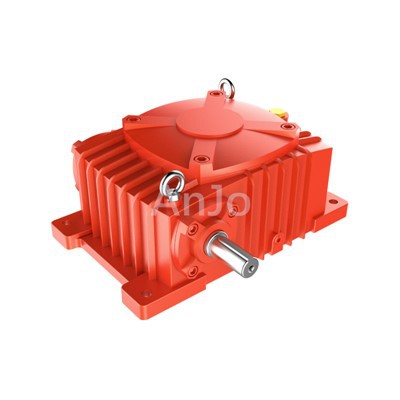
First, let’s refresh what a screw jack even is, real quick (no confusing jargon, promise). At its core, a screw jack has a threaded screw (that’s the “screw” part) and a nut, usually inside a gear or housing. When you turn the screw, the nut moves along it—boom, linear motion. But rotation is just a circular version of that, right? Wait, but not just turning a screw by hand—we’re talking about moving a heavy object in a full 360 or even partial rotation, sometimes with tons of torque (that’s the twisting force you need to spin something). So why would someone even want to use a screw jack for rotation instead of, say, a motor or a gearbox? That’s the first question most new clients ask.
Let’s use a super relatable example. Last month, we got a call from a guy who runs a steel fabrication shop. He needed to rotate a 12,000-pound steel beam into a vertical position for welding. Before he was using big cranes and slings, but that was slow, risky, and he kept damaging the beam’s finish. He ended up using two of our worm gear screw jacks, paired with a simple rotating plate. Here’s how it worked: he mounted each screw jack to a fixed base, and the top of each jack connected to the rotating plate. The plate had the steel beam bolted to it. When we wired the two jacks to a single synchronous motor (so they moved at the exact same speed—super important, otherwise the plate tilts), turning the screw pushed the jacks up evenly, which made the plate spin smoothly from horizontal to vertical. No slinging, no crane, just steady, controlled rotation. That’s the kind of real-world use I live for.
But wait, it’s not just lifting a plate and calling it a rotation setup. There are actually two main ways screw jacks do rotation, and I see clients mix them up all the time. Let’s clarify those, because getting this wrong is how you end up with a wonky rotation (and possibly a broken part).
First method: Direct rotational drive with a rotating nut or screw. Some screw jacks are designed so the nut itself is the rotating part, not the screw. Wait, let’s explain that. Normally, when you turn the screw, the nut moves up or down. But if you lock the screw so it can’t spin, and instead rotate the nut, the nut will travel along the fixed screw. But if you mount that nut to a rotating platform? As the nut moves up, it pushes the platform in a circular motion? No, wait—wait, torque is the key here. If the nut is connected to a ring gear, and the jack’s gear train turns that ring, the nut spins around the fixed screw, creating a rotational force. That’s perfect for things like rotating large tanks in chemical plants—you need to spin a 50,000-gallon tank slowly and precisely for cleaning or inspection, no jerky movements. Our ball screw jacks are great for this because they have less friction, so they can handle that kind of continuous rotation without overheating (pro tip: worm gear jacks are better for heavier, slower rotation; ball screws are faster for lighter loads).
Second method: Using multiple screw jacks in a synchronized array to “tilt and turn” something. This is the steel beam example I mentioned earlier, but it’s way more widespread. Think about wind turbine blades—when they’re being serviced, technicians need to rotate the blade to access different parts. Instead of a big, clunky hydraulic motor, some maintenance teams use 4-6 small screw jacks placed around the blade’s root. When all the jacks extend or retract at the same rate, the blade rotates slowly, safely, and with super accurate positioning. The best part? Screw jacks have built-in overload protection—if one jack pushes too hard, it will slip before breaking, which is a huge safety win for expensive, delicate equipment.
Now, let’s get real about the myths. A lot of people new to screw jacks think they can only handle tiny, straight movements. Or that rotation would wear them out super fast. Wait, no—we’ve had a client using our jacks to rotate a printing press roller 24/7 for two years, and the only maintenance they do is lubrication every 6 months. The key here is matching the right jack to the job. If you try to use a standard screw jack (designed for linear lift) for continuous rotation, you will have issues—like the screw not moving smoothly, or the gear train wearing out. But if you specify a jack built for rotational torque, it’s designed to handle that twisting force without failing. That’s where we come in as a supplier—we don’t just sell jacks; we help you pick the right one for your exact rotation needs.
Another common question: How much weight or torque can a screw jack handle for rotation? Let’s put numbers to this, but keep it real. Our standard jacks go from 1/4 ton all the way up to 100 tons. For rotation, torque depends on the load and the radius of the object you’re spinning. For example, a 10-ton load on a 10-foot radius plate would need a jack that can handle around 10,000 foot-pounds of torque. That’s totally doable with our medium-duty worm gear jacks—we’ve got custom models that crank out way more if needed. And because they’re mechanical, not hydraulic, you don’t have to worry about leaks, which is a big deal for industries like food and beverage where fluid contamination is a no-go.
Wait, let’s talk about a recent project that blew my mind. A renewable energy client needed to rotate solar panel arrays on a test site to track the sun’s path. They tried motors and gearboxes first, but they were too expensive and failed in harsh desert conditions. They paired 8 of our sealed, corrosion-resistant screw jacks with a PLC system that synchronized their movement. The arrays rotate 120 degrees every hour, nonstop, in 110-degree heat and blowing sand. Two years later, not a single jack has had to be replaced. That’s the kind of application that makes me go, “Dang, screw jacks are way more versatile than people give them credit for.”
Now, let’s address the fine print, because nothing’s perfect (well, almost nothing). When using screw jacks for rotation, there are a few non-negotiables you have to follow, or you’ll run into problems. First, synchronization is everything. If two jacks are moving at slightly different speeds, you’ll get uneven torque on the rotating object, which can cause it to bind or even tip. That’s why we always recommend using synchronized controls—either a single motor driving multiple jacks, or a PLC that’s calibrated to keep every jack in step. Second, lubrication. Rotation means the screw and nut are moving in a circular path, not just straight up and down, so they need regular, proper lubrication. We include a quick guide with every jack, but if you’re using it for heavy rotation, we’ll send our tech team to walk you through maintenance. Third, don’t exceed the duty cycle. If you run a screw jack continuously 24/7 for rotation, you need a high-duty-cycle model—standard jacks are designed for intermittent use (like lifting a car once a month), not constant spinning. That’s a mistake we see all the time from folks who don’t know the difference, and we’re happy to help them switch over to the right model.
Let’s wrap this up with why this matters for you, whether you’re a fabrication shop owner, a maintenance tech, or an engineer. Screw jacks for rotation aren’t a gimmick—they’re a reliable, cost-effective alternative to other rotation methods. They’re safer (no hydraulics leaking, built-in overload protection), more accurate (you can stop and adjust the rotation at any point, not just full turns), and more durable for harsh environments. As a screw jack supplier, we’ve spent years testing these applications, and we’ve seen every possible win (and every possible mistake) so we can help you get it right the first time.
If you’re thinking about using a screw jack for rotating something—whether it’s a tank, a beam, a solar array, whatever—don’t guess. Reach out, tell us what you’re rotating, how much it weighs, how fast you need it to spin, and what environment you’re working in. We’ll hook you up with the right jack, the right controls, and even a setup plan if you need it. No stuffy sales pitches, no hidden fees, just straight talk from people who work with these jacks every single day.

Before I go, let’s leave you with this: the next time you see a big, heavy thing rotating smoothly, there’s a good chance a screw jack is doing the work. It’s not magic, it’s just smart engineering, and we’re the folks who make that engineering accessible for any job, big or small.
Custom Gearbox & Motor References:
- European Standard EN 1570-1: Safety requirements for lifting tables – Part 1: Lifting tables for personnel and loads
- Machinery’s Handbook, 31st Edition: Screw Jacks and Linear Motion Systems
- American Society of Mechanical Engineers (ASME) B20.600: Standard for Linear Motion Ball Screws and Ball Screw Assemblies
Hangzhou ANG Drive Co., Ltd.
As one of the most professional screw jack manufacturers and suppliers in China, we’re featured by quality products and good service. Please rest assured to wholesale custom made screw jack from our factory. Good service and quality products are available.
Address: No.185, Jincheng Rd., Hangzhou 311202, China
E-mail: export2@angdrive.com
WebSite: https://www.anjodrive.com/
