Hey guys, let’s cut to the chase—if you’ve ever ordered 10,000 PE bottles for your skincare line, cleaning product startup, or even a small food brand, you probably didn’t overthink the “PE bottle brand” at first. I mean, it’s just plastic, right? But here’s the thing: I’ve been a PE bottle supplier for 8 years, and I’ve seen brands get burned so many times because they skipped asking, “Wait, does the actual brand of this PE bottle even matter?” Let’s break this down like we’re chatting over coffee, no stuffy jargon, just real stuff that’ll make you stop buying the cheapest option online. PE Bottle

First off, let’s make sure we’re on the same page—PE here is high-density polyethylene, the kind of plastic that’s super common for squeeze bottles, pill bottles, shampoo containers, and stuff that needs to be flexible but tough. Not that flimsy thin stuff that tears if you look at it wrong. Now, why does the brand of this bottle even matter? It all starts with the resin, the raw material. You can buy PE resin from 10 different places, and two batches can be totally different just because the brand of resin you pick changes things. The bad brands of PE bottles (the ones that pop up on Alibaba with $0.02 a unit listings, let’s be real) often cut corners on resin—they use recycled PE that’s been ground up, maybe contaminated, or mix in cheap low-density PE (LDPE) that makes the bottle weak. The good, reputable PE bottle brands? They use virgin PE resin for most applications, and if they do use recycled, it’s food-grade or pharma-grade recycled, tested to meet strict standards. I once had a client who switched from a cheap brand to ours because their old bottles were warping after they filled them with room-temperature lotion. Turned out the cheap brand used resin with way too much low-density PE, so when the lotion sat in the sun on their warehouse shelf, the bottle’s molecular structure broke down, and it bent like a sad straw. That’s not a “plastic problem”—that’s a bad bottle brand problem.
Next, let’s talk about molding quality, which is 100% tied to the PE bottle brand. Molding isn’t just pouring plastic into a mold and calling it a day. Reputable brands use state-of-the-art injection molding machines that control temperature, pressure, and cooling down to the millisecond. The cheap ones? They use old, beat-up machines that are probably 15 years old, so you get uneven walls on the bottle. One side is super thin, the other is thick, and guess what happens when you fill it with something that’s not water—like a thick conditioner or a corrosive cleaning product? That thin side cracks, or leaks. I had a cleaning supply client last year who lost $12k in returns because their old bottle brand had uneven walls; half the shipments leaked during shipping, getting all over the boxes and other products. When they switched to our bottles, we did a pre-shipment pressure test (nothing fancy, just squeezing until we saw if any fluid came out) and only 0.2% failed, compared to the cheap brand’s 7% failure rate. The difference? Our brand uses molding machines that keep wall thickness consistent within 0.01mm, while the cheap brands let walls vary by 0.1mm or more. That might sound tiny, but for a 8-oz squeeze bottle, that’s the difference between holding up and breaking.
Then there’s closure compatibility and seal integrity—this is the stuff that makes or breaks a product, especially for food or pharma. A lot of brands forget that the bottle brand has to work with the cap they’re using, right? The cheap PE bottle brands often don’t test their closures. They just slap on a generic cap, and if it’s a little loose or tight, they don’t care. The good PE bottle brands have their own in-house quality teams that test every cap, every seal, every batch. They use what’s called a “torque tester” to make sure the cap tightens to the right amount—too loose, and it leaks; too tight, and customers can’t open it (hello, bad reviews!). For food or pharma, that seal is non-negotiable. I once had a small supplement brand come to me because their old bottle brand’s pill bottles were leaking moisture, making the pills go moldy. The cheap brand didn’t use a proper induction liner in the cap seal, so air got in. Our brand offers custom liners that are tested to meet FDA food standards, and after switching, their pill spoilage rate dropped from 5% to less than 0.5%. That’s the kind of difference that only a brand that cares about quality, not just price, can deliver.
Wait, let’s not forget regulatory compliance. This is huge if you’re selling anything that touches food, medicine, or even personal care products that go on skin. The cheap PE bottle brands almost never do third-party testing. They’ll say “food-grade,” but they’re lying—they just label it that because they know people care. Reputable PE bottle brands do third-party testing every single batch, testing for things like heavy metals, residual chemicals, and whether the leach into the product you’re filling. Last year, we had a client who got an FDA warning letter because their old bottles leached BPA (wait, no, PE is BPA-free, but some cheap recycled PE has other contaminants) into their organic serum. They had to recall 20,000 bottles, which cost them over $50k. When they switched to our bottles, we provided them with full COAs (certificates of analysis) every batch, showing that our PE meets FDA, EU REACH, and all other relevant standards. That’s not something the cheap brands offer—they’ll give you a generic COA that doesn’t even match your specific bottle size.
Now, let’s talk about long-term durability and storage. If your product is gonna sit on a shelf for 6 months, or a year, the bottle’s brand matters here too. UV resistance, for example—if you’re selling a skincare product that’s sensitive to light, you need an opaque PE bottle that blocks UV rays. The cheap brands will use clear PE with a cheap pigment added that fades after a month, so the product breaks down. Our brand uses UV-stabilized pigment that’s tested to last for 2 years, even in direct sunlight. I had a sunscreen client who noticed their product was going rancid after 3 months on the shelf. Their old bottles were from a brand that used cheap, non-stabilized pigment, so UV light got in, and the sunscreen’s active ingredients broke down. Switched to our UV-resistant opaque PE bottles, and their product shelf life went back to the 12 months they promised. That’s the kind of brand commitment that makes a difference.
Wait, I should also be real with you—price is a factor, obviously. But I see way too many brands choosing a $0.02 cheaper bottle that costs them way more in returns, recalls, bad reviews, and lost customers. Let’s do the math: if you order 100,000 bottles, the cheap brand is $2,000 cheaper. But if you have a 7% failure rate, that’s 7,000 bottles, each costing you $5 to replace the product plus the shipping, plus the return shipping— that’s $35,000, way more than the initial $2k savings. And don’t even get me started on brand reputation. If a customer buys your shampoo and it leaks all over their purse, they’re not gonna leave a nice review for the bottle—they’re gonna blame your brand. That’s irreversible, and it’s 100% avoidable if you pick the right PE bottle brand.
Let me wrap this up, because I know I went off on some examples, but here’s the takeaway: the PE bottle brand isn’t just a label. It’s raw material quality, molding precision, seal testing, regulatory compliance, and quality control that follows every batch. I’ve been in this game long enough to know that when you pick a reputable PE bottle brand, you’re not just buying plastic—you’re protecting your product, your customers, and your own brand.
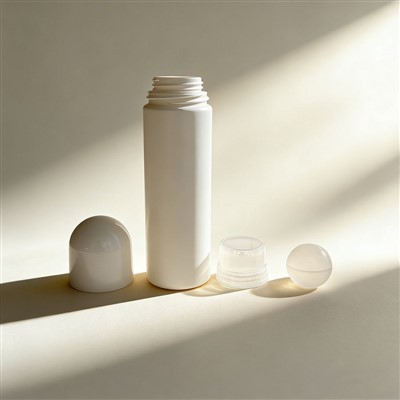
If you’re tired of dealing with leaky, warped, non-compliant PE bottles that cost you time and money, hit me up to chat. We can talk about your specific needs—whether it’s food-grade, pharma, skincare, cleaning products, whatever—run through samples, and make sure your bottles are exactly what you need, no surprises. We don’t do that $0.02 garbage that makes clients cry. Just solid, high-quality PE bottles that do the job right.
PET Plastic Bottles References:
- American Chemistry Council. (2022). High-Density Polyethylene (HDPE) Resin Properties and Applications.
- Food and Drug Administration. (2021). Guidance for Industry: Plastic Containers and Packaging for Food Contact.
- Society of the Plastics Industry. (2020. Molding Quality Standards for HDPE Packaging.
Taizhou Fuyan Trading Co., Ltd.
As one of the most professional pe bottle manufacturers and suppliers in China, we’re featured by quality products and good service. Please rest assured to wholesale bulk pe bottle in stock here from our factory. Customized orders are welcome.
Address: Lupu Small and Micro Industrial Park, Lupu, Yuhuan City, Zhejiang Province
E-mail: taizhoufuyan@outlook.com
WebSite: https://www.fuyantrading.com/
