If you’ve ever watched a car engine turn over, spun a generator to power a home, or even pedaled a bike up a steep hill, you’ve used a crankshaft—an unassuming metal part that’s responsible for turning back-and-forth motion into the spin that moves the world. As someone who’s spent 15 years sourcing, machining, and supplying crankshafts to manufacturers across the industrial and automotive sectors, I’ve heard my fair share of questions about this part: Where did it come from? Who first thought of turning linear push into rotational energy? Most importantly, how did it evolve into the reliable, precision-machined component we rely on today? Let’s walk through the history of the crankshaft, from its earliest, crudest forms to the high-tolerance parts I ship every week, and break down why this invention is still the unsung hero of modern machinery. Crankshaft

The story of the crankshaft doesn’t start in a factory or a garage—it starts in ancient times, when humans first figured out how to make work easier by harnessing motion. For thousands of years, people used tools that relied on back-and-forth force: pulling a hoe through soil, pushing a chisel to carve stone, pumping water from a well with a foot pedal. But converting that straight, push-pull movement into something that could do repeated, continuous work? That breakthrough took shape around the 1st century CE in the Roman Empire, of all places.
In 1927, archaeologists digging near the ancient Roman town of Pompeii (buried in 79 CE by Mount Vesuvius) uncovered a wooden crank mechanism attached to a Roman water-powered mill. The part was simple: a short wooden rod with a handle sticking out at a right angle, designed to be spun by hand or by a water wheel, and connected to a gear that turned the mill’s grindstone. It wasn’t called a crankshaft yet, not in the modern sense, but it was the same basic principle: rotating a right-angle lever to turn linear force into circular motion. What’s remarkable is that this part was built for a very specific, practical need—small-scale milling—and it worked. For centuries after Pompeii, this wooden crank was used in Europe for everything from grinding grain to turning large scissors for shearing cloth. It was basic, but it solved a problem no one had really cracked before: how to make manual or animal power do more work without extra effort.
The next big leap for the crankshaft came not in Europe, but in ancient China, around the 2nd century CE. Chinese engineers developed what’s widely considered the first true crank-and-connecting rod system, a pair of parts that worked together to turn reciprocating (linear) motion into rotation and back again. The key difference here was the connecting rod: that’s the long, slim part that links the crankshaft’s crank pin (the offset part that spins) to whatever’s moving back and forth. Early Roman cranks were standalone, spinning a wheel directly; Chinese engineers realized that if you attached a rod to the crank pin, you could use the back-and-forth motion of a piston to turn the crank, or vice versa.
This invention changed Chinese industry overnight. By the Han Dynasty, crankshafts were being used in bellows for iron smelting—something that would become critical for the growth of metalworking later on. Before that, blacksmiths pumped bellows by hand, limiting how hot they could get their furnaces and how much iron they could produce. The crank-and-connecting rod system let a single operator pump a bellows with far less effort, and water wheels could even be attached to spin the crank, automating the process. By the 11th century, Chinese crankshafts were being used in silk-reeling machines, too, turning the tedious work of spinning raw silk thread into a continuous, efficient process. It took another 500 years for this technology to reach Europe, via trade routes like the Silk Road, when European engineers began adapting Chinese designs for their own factories during the Industrial Revolution.
Speaking of the Industrial Revolution—that’s when the crankshaft went from a simple wooden or cast-iron part to a workhorse of modern civilization. By the late 1700s, inventors were experimenting with steam engines, which relied on pistons moving back and forth inside cylinders to turn a wheel. But early steam engines, like Newcomen’s 1712 atmospheric engine, were clunky, inefficient, and mostly used for pumping water out of mines. They lacked a way to turn that linear piston motion into smooth, continuous rotational motion that could power mills, trains, or factory machinery.
That’s where the crankshaft fixed a huge flaw in early steam engine design. In 1781, James Watt, the Scottish engineer famous for improving the steam engine, patented a design that used a crank-and-connecting rod system to turn reciprocating piston motion into rotation. Watt’s crank was made of cast iron, machined to precise tolerances (a big deal for the time, when most parts were hand-made and inconsistent), and it doubled the efficiency of steam engines, letting them power everything from textile mills to steam locomotives. Suddenly, factories didn’t need to be located near fast-flowing rivers—they could be anywhere a steam engine could run, and the crankshaft made that possible.
But the Industrial Revolution’s crankshaft was still a far cry from what we use today. Early parts were large, heavy, and prone to breaking under the stress of repeated high-torque spinning. It wasn’t until the mid-19th century, when inventors began experimenting with internal combustion engines, that crankshafts got their most high-stakes job yet. The internal combustion engine, which used small explosions in cylinders to push pistons, required a crankshaft that could handle far faster, more frequent motion than a steam engine. The first practical four-stroke gasoline engine, invented by Nikolaus Otto in 1876, used a cast-iron crankshaft, but by the 1890s, as cars began to be mass-produced, engineers realized cast iron wasn’t strong or light enough for high-speed, high-performance engines.
That’s when forged steel crankshafts became standard. Forging—heating a metal blank and hammering it into shape under high pressure—creates a part that’s stronger, more durable, and less likely to crack than cast iron. The process aligns the metal’s grain structure along the shape of the crank, so it can withstand the constant twisting and stress of thousands of revolutions per minute. By the early 1900s, almost every car engine used a forged steel crankshaft, and the part’s design began to evolve to match engine performance: adding counterweights (small, weighted sections on the crank) to balance the rotating parts, reducing vibration and wear; using precision grinding to make the crank pins and journals (the smooth surfaces where bearings ride) to within thousandths of an inch tolerance; and engineering multi-throw crankshafts for six, eight, and twelve-cylinder engines, which power everything from family sedans to heavy-duty trucks.
Today, crankshafts are more advanced than any engineer of the 1800s could have imagined. We supply crankshafts for a huge range of applications: automotive gas and diesel engines, marine engines, industrial generators, heavy construction equipment, and even small engine lawn and garden machinery. The crankshafts we produce start as high-grade alloy steel billets, which are forged, heat-treated to adjust their strength and hardness, then machined, ground, and balanced to strict specifications. Even the smallest variation in size or surface finish can cause excessive vibration, wear, or engine failure, so every part we leave our facility is tested for dimensional accuracy, material integrity, and balance.
What still blows me away about the crankshaft, after all these years, is how fundamental its purpose hasn’t changed in 2,000 years. We started with a wooden lever to grind grain, now we have precision steel parts spinning at 6,000 RPM to power a race car, but the core function is the same: turning push into spin. In a world that’s obsessed with new technology—electric cars, artificial intelligence, space travel—the crankshaft is a reminder that some inventions are so perfect, they don’t need to be replaced, just improved.
As a crankshaft supplier, I work with customers who need parts for everything from vintage engine restorations to next-generation electric hybrid powertrains, and each project reminds me how interconnected this part is to every industry. Whether you’re a small engine repair shop needing a replacement for a 1960s tractor, or a large automotive manufacturer sourcing crankshafts for a new line of electric hybrid engines, the quality of the crankshaft you use makes all the difference. A poorly made crankshaft can cause engine failure, downtime, and lost revenue; a precision-made one can last the life of the machine it’s in.
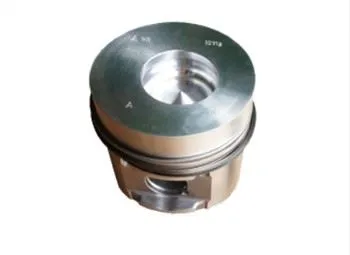
If you’re in the market for reliable, high-performance crankshafts for your automotive, industrial, or marine application, we’ve spent decades perfecting our manufacturing process to meet even the most demanding specifications. We work with each customer to understand their needs, from material grade to balance tolerances, and deliver parts on time, every time. Don’t settle for off-the-shelf crankshafts that cut corners on quality—reach out to our team to discuss your project today.
Fuel Injector References
- Needham, J. (1965). Science and Civilisation in China, Volume 4: Physics and Physical Technology, Part 2: Mechanical Engineering. Cambridge University Press.
- Ransome, J. (1970). The History of the Crankshaft. Journal of Mechanical Design, 92(1), 119-126.
- Smith, R. (2001). The Industrial Revolution and the Development of the Crankshaft. Technology and Culture, 42(3), 489-512.
- Pompeii Archaeological Project. (1928). Excavations of a Roman Water Mill with Crank Mechanism. Archaeologia, 77, 1-24.
- Otto, N. (1876). Patent Improvements in Gas Engines. German Imperial Patent No. 232.
Xingtai Haoheng Trading Co., Ltd.
Xingtai Haoheng Trading Co., Ltd. is one of the most professional crankshaft manufacturers and suppliers in China, specialized in providing high quality auto parts made in China. We warmly welcome you to wholesale discount crankshaft in stock here from our factory. For customized service, contact us now.
Address: No.88, Quannan Street, Shangquancheng, Xingtai, Hebei, China.
E-mail: Zhang@hauhen.com
WebSite: https://www.xtengineparts.com/
