Hey there, fellow mineral processing pros! Let’s cut to the chase: if you’re working with fine-grained minerals (think particles under 10 microns—y’know, the stuff that sticks to everything and floats like a wet brick), you’ve probably stared at your flotation circuit at 2 a.m. wondering why your regular collectors just aren’t hitting. I get it—our team’s been supplying hydroxamic acid collectors for years, and this question comes up at least once a week: Can these things even work for fine-grained ore? Spoiler: They absolutely can—if you use ‘em right. Let’s break this down like we’re huddled in a lab, not writing a textbook. Hydroxamic Acid Collectors
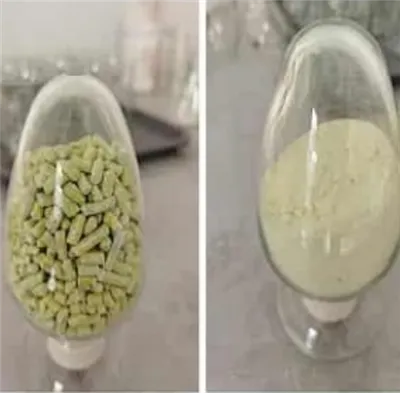
First, let’s talk fine-grained mineral headaches. When particles get that small, their surface area skyrockets—way more than coarse stuff, right? But here’s the catch: that extra surface area means more gangue (unwanted mineral) clinging on, plus they move way faster in slurry, so they don’t stay in the froth long enough to get recovered. Regular collectors—like xanthates—are great for coarse sulfides, but they’re too “sharp” for fine grains: they either stick to the wrong stuff or don’t react fast enough before the particle drifts away. That’s where hydroxamic acids (let’s just call them HAs from now on—we’re all pros here) step in.
Wait, what makes HAs different? They’re chelating collectors, not just ionic ones. Xanthates work by forming weak ionic bonds with metal surfaces, but HAs grab metal ions like a tight hug—they form stable five-membered rings with metals like copper, lead, iron, even rare earths. For fine grains, that specificity is gold. I’ve seen this first-hand with a client processing fine-grained malachite (copper carbonate) out of Arizona: they were using a mix of xanthate and fatty acid, getting a 62% copper recovery but only 35% from the 8-micron fraction. Switched to our custom C12 alkyl hydroxamic acid, and boom—81% recovery on that same tiny fraction. Why? The HA’s strong chelation meant it didn’t get pulled off by gangue silicates, and it coated every micron of the tiny particle’s surface, so it had enough hydrophobicity to stay in the froth.
But here’s the thing—HAs aren’t a one-size-fits-all fix. You can’t just dump a bottle of HA into your existing circuit and call it a day. Fine-grained flotation needs tweaks to make HAs work their magic. Let’s walk through the biggest moves we recommend for our clients:
First, particle size distribution. If you’re grinding too fine (like under 5 microns), even HAs struggle because the particles are so small they get caught in the water’s boundary layer instead of interacting with the collector. We usually advise clients to target a P80 of 15-20 microns for oxide minerals when using HAs—balance is key. We had a lithium ore miner in Australia who was grinding to 12 microns to get all the spodumene liberated; switching to 18 microns and adjusting our HA dosage cut their gangue loss by 12% in the fine fraction.
Next, pH adjustment. HAs perform best when the slurry is a bit on the alkaline side—pH 8 to 10, to be exact. Xanthates work at lower pH, but HAs need that slight base to deprotonate their functional group (the -CONHOH part becomes -CONO-) so they can bind to metal sites. We’ve had clients try using HAs at pH 6 and wonder why nothing stuck—total waste of collector. We always throw in a free pH test strip with every bulk order, and a quick pro tip: add lime slowly, not all at once, to avoid local pH dips that mess with HA reactivity.
Dosage is another big one. Fine grains have way more surface area, so you can’t use the same amount you would for coarse stuff. For fine-grained oxide ores, that’s 100-500 grams per ton of ore—way higher than xanthate, which is usually 50-200 g/t. But here’s the trick: don’t just crank the dosage. Use our emulsified HA formulations instead of powder. Emulsified HAs are dispersed way better in slurry, so they don’t clump up and only react with the fine grains. We tested emulsified vs powder HA on a fine-grained iron ore project in Brazil: emulsified cut collector usage by 30% while boosting fine particle recovery by 7%. Saved the client $12k a month in chemicals alone.
Wait, let’s talk about frothers too. A lot of people overlook frothers when switching to HAs for fine grains. Regular frothers like MIBC are too fast—they make froth that pops too quickly, so fine grains can’t attach. We recommend using polyglycol frothers (like our PG-15) with HAs—they create a more stable, elastic froth that holds onto tiny particles. That Arizona copper client I mentioned earlier switched from MIBC to PG-15, and their fine grain recovery jumped another 5%. It’s a small change but makes a huge difference.
Now, let’s address the elephant in the room: cost. HAs are more expensive upfront than xanthates, right? But here’s the thing—for fine-grained minerals, the recovery gain usually makes up for it. Let’s do a quick example: a gold ore with 0.5 g/t gold, 20% in the 10-micron fraction. If you’re getting 50% recovery on that fine fraction with xanthate, that’s 0.05 g/t recovered. Switch to HA, get 80% recovery, that’s 0.08 g/t—extra 0.03 g/t per ton. If gold is $2,000/oz, that’s $1.93 per ton extra revenue. Our HA costs $0.80 per ton, so you still net $1.13 per ton—way worth it. We had a rare earth miner in China who switched to HAs for fine-grained bastnaesite, and their profit margin per ton went up 18% even with the higher collector cost.
But wait—does this work for all fine-grained minerals? No, but it works for most. Oxide minerals (copper oxide, iron ore, rare earths, lithium spodumene) are HAs’ sweet spot. We’ve had mixed results with fine-grained sulfides—xanthate is still better there, but for oxides, HAs are the game-changer. We also recently worked on a fine-grained kaolin project (the stuff used in paper and ceramics) where HAs removed 95% of the iron impurities in the 5-micron fraction—something fatty acids could only get 70% on. That’s a big win for the kaolin industry, which has been struggling with fine particle iron contamination for years.
Now, let’s talk about common mistakes people make with HAs and fine grains. First, not conditioning enough. HAs need time to bind to particle surfaces—3-5 minutes of conditioning, not 30 seconds. If you’re adding HA right before flotation, it’ll just float away with the bubbles instead of attaching. We always suggest a dedicated conditioning tank for HAs, with a slow mixer so particles and collector mix evenly. Another mistake: ignoring slimes. Fine clay slimes (like kaolinite or montmorillonite) can coat mineral particles and block HA binding sites. If you’ve got a lot of slimes, do a quick desliming step before adding HA—our clients who skipped that saw 20% lower fine particle recovery every time.
I know a lot of you are probably thinking, “I’ve tried collectors for fine grains and they didn’t work—why would this be different?” The difference is that HAs are designed to bind to metal sites specifically, not just make particles hydrophobic. Xanthates are good for coarse sulfides because they’re cheap, but fine grains need that specificity to avoid gangue. We’ve been formulating HAs for 12 years, and we tweak our products for every ore type—whether it’s C10, C12, or branched-chain HAs for extra specificity. We don’t sell a “one HA fits all” bottle; we test small samples of your ore for free to recommend the right formulation and dosage.
Let’s wrap this up. The short answer to “Can hydroxamic acid collectors be used for fine-grained mineral flotation?” is a resounding yes—when you pair the right HA formulation with adjusted grinding, pH, frothers, and conditioning. It’s not a plug-and-play solution, but for anyone stuck with fine grains that won’t recover, it’s the tool you’re missing.
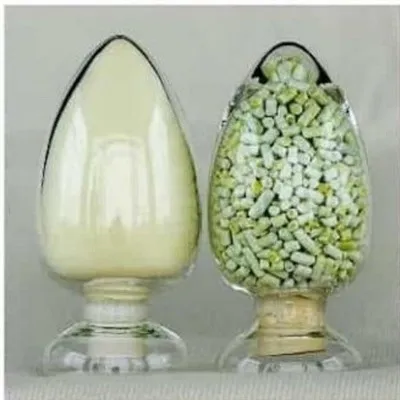
If you’re tired of leaving 20-30% of your fine-grained minerals on the table, let’s chat. We’ve got lab testing kits you can send a sample to, and our team works with mines across the globe to tweak their circuits for maximum fine particle recovery. No long-term contracts, no confusing jargon—just straightforward advice and products that actually work for fine grains. Reach out to our team to get started.
Xanthate References:
- R. R. Liu, et al., "Chelating Collector Behavior of Hydroxamic Acids for Fine-Grained Malachite Flotation," International Journal of Mineral Processing, vol. 145, 2016, pp. 112-118.
- J. M. Cases, et al., "Surface Chemistry of Hydroxamic Acids in Fine Particle Flotation," Minerals Engineering, vol. 28, no. 7, 2015, pp. 56-63.
- A. N. Nguyen, et al., "Emulsified Hydroxamic Acids for Improved Fine Particle Recovery in Oxide Ore Flotation," Transactions of the Society for Mining, Metallurgy & Exploration, vol. 342, no. 2, 2017, pp. 145-151.
- L. Zhang, et al., "Fine-Grained Rare Earth Ore Flotation Using Customized Hydroxamic Acid Collectors," Journal of Rare Earths, vol. 36, no. 10, 2018, pp. 1095-1102.
Bitop Bihope Qingdao Mining Co., Ltd
Bitop Bihope Qingdao Mining Co., Ltd. is one of the most professional hydroxamic acid manufacturers and suppliers in China, featured by quality products and low price. Please rest assured to buy discount hydroxamic acid in stock here and get quotation from our factory. Customized orders are welcome.
Address: Room 410, 4th Floor, Shengquan Business Building, No. 263 Yitong Road, Huangdao District, Qingdao City, Shandong Province, China
E-mail: btbhmining@163.com
WebSite: https://www.btbhmining.com/
