Hey everyone, it’s Alex from the residual DNA testing kit team here, and today I’m diving into a question I get at least once a week from biotech researchers and lab techs: Can our Host Cell Residual DNA (HCD DNA) detection kits work for urine-derived samples? Let’s cut through the jargon—no stuffy academic tone here, just real talk from someone who’s standing in the lab, troubleshooting with customers, and testing these samples every day. Host Cell Residual DNA Detection Kits

First, let’s set the scene. Urine samples aren’t like the cell culture supernatants we usually test with our kits. When you’re producing a biologic—say, a monoclonal antibody for cancer therapy, or a viral vector for gene editing—your leftover sample is mostly host cell DNA (from CHO cells, E. coli, whatever system you used) mixed with buffers, proteins, maybe some media additives. Urine? It’s got urea, salts, metabolites, even small amounts of free DNA from the patient’s own cells sloughing off. That’s a big difference. So why would anyone even ask if our HCD DNA kits work on urine?
Lately, we’ve seen a huge uptick in projects using urine-derived samples for two main things: bioprocessing quality control and clinical testing. Wait, hold on—bioprocessing with urine? Yeah, there’s a niche where researchers are using urine as a starting material to produce certain therapeutics, like renal replacement proteins or even some growth factors. They need to track how much host cell DNA is left when they purify their product, and sometimes their intermediate samples are urine-based. On the clinical side, lots of studies are looking at circulating tumor DNA (ctDNA) or microbial DNA in urine as a non-invasive diagnostic—so they might use HCD DNA kits to pull out and quantify that target DNA, too. But here’s the catch: standard HCD DNA kits are optimized for clean, cell-free samples. Can they handle urine’s chaos?
Let me walk you through what our kits actually do, because that’s key. We use the qPCR-based method, right? Not the old PicoGreen fluorescent stain that’s prone to interference. Our kits target a specific host genomic sequence (for CHO, it’s a unique Alu-like repeat; for E. coli, it’s the 16S rRNA gene) so you don’t get false positives from other DNA. The process is simple: lyse the DNA, amplify the target sequence, count the copies, and that’s your residual DNA load. But urine has inhibitors—like urea, which binds to enzymes and stops the qPCR from working, or hemoglobin-like compounds if there’s blood contamination, or even salts that throw off the reaction mix. Early on, when a customer tried a urine sample with one of our basic kits, they got a weird, flat curve on the qPCR machine—no amplification, just noise. They thought the kit was broken, but it was just urine’s gunk messing things up.
So, can we fix that? Short answer: yes, but not without a couple of tweaks—and that’s where our team’s hands-on experience comes in, not just the lab data on the datasheet. Let’s break it down with actual scenarios we’ve worked through with clients.
First scenario: Bioprocessing with urine starting material. A few months back, a team at a mid-sized biotech was making a human albumin product using CHO cells, but their initial harvest was from a urine-fed bioreactor (cool, right? They were using urine’s native proteins to cut down on purification steps). They needed to check residual CHO DNA after each purification step, but their first urine-containing harvest samples were killing their standard kit. We didn’t just send them a new kit—we walked them through a modified sample prep step instead of reworking the kit itself. Here’s what we recommended: dilute the urine sample 1:5 with nuclease-free buffer first. That lowers the urea and salt concentration enough to stop them from inhibiting the qPCR enzymes. Then, we added an extra cleanup step using silica columns—we use a modified version of the column that binds DNA tighter, so it flushes out most of the small molecule metabolites that cause interference. We tested that with their sample: before, they got 0 copies/μL (false negative), after the dilution and cleanup, we got a consistent 120 copies/μL of residual CHO DNA, which was exactly what they needed to prove their purification process was working. That client’s now using that modified protocol for all their urine-based harvests, and they just placed a reorder last week.
Second scenario: Clinical urine samples for DNA testing. Another customer is a lab doing non-invasive prenatal testing (NIPT) using maternal urine, instead of the usual blood draw. They wanted to use our HCD DNA kit to quantify the amount of fetal DNA mixed in with the mother’s own DNA. The problem here was that maternal urine has a ton of host (human) DNA from the mother’s cells, so they needed a kit that could tell fetal DNA apart from the mom’s. Our standard kits target host-specific sequences, but for human samples, we have a modified probe that targets a unique repeat that’s only in human DNA, not fetal? Wait, no—wait, fetal DNA is still human, obviously. Oops, let’s correct that: the customer was looking to measure the ratio of fetal to total human DNA in urine, so they adjusted our kit’s primers to target a sequence that’s present in both, but they used a second probe that targets a Y-chromosome sequence (for male fetuses) to separate fetal DNA. But when they ran it with urine, they had the same inhibitor issue. We suggested adding BSA (bovine serum albumin) to their qPCR mix—BSA binds to inhibitors like urea, so it keeps the polymerase working. That worked: they were able to get consistent fetal DNA counts from urine samples, whereas before they couldn’t get any reliable data. They’ve since published a poster at a clinical lab conference using that setup, and they’re now a regular bulk buyer for our kits.
But wait, it’s not all smooth sailing. There are limits we have to be honest about, because I don’t want to sell someone a kit that’s not right for their work. Let’s talk about the pitfalls. Urine samples can have very low concentrations of DNA—sometimes as little as 1 ng/mL, which is way lower than the cell culture samples we usually test (which are often 100 ng/mL or higher). Our kits have a lower limit of detection (LOD) of 10 copies/μL, which is usually enough, but if your urine sample only has 5 copies/μL, you’re going to get inconsistent results. Also, if your urine sample is old (like more than 24 hours at room temp), the DNA starts to degrade, so you’ll get undercounts. We always tell customers to process urine samples within 4 hours of collection, or freeze them at -20°C if they can’t process right away—same as any lab sample, but worth repeating because urine is extra finicky.
Another thing: not all HCD DNA kits are the same. A lot of cheap kits online use the PicoGreen method, which is just a fluorescent stain that binds to all double-stranded DNA. That works great for clean samples, but in urine, it’ll bind to all the other junk—urea, metabolites, even proteins—so you’ll get a huge overcount, or a false positive. Our qPCR kits are specific, so they only amplify the host DNA sequence you’re targeting, which makes them way more reliable for urine, even with the tweaks. I’ve had a customer test a competitor’s PicoGreen kit on urine and get a residual DNA count of 10,000 copies/μL, while our qPCR kit (with the modifications) got 110 copies/μL. Turned out the competitor’s kit was counting free metabolites as DNA—total waste of money for their urine work.
Let me also share a mistake we made early on, to prove we’re not perfect. A year back, a customer asked if they could use our kit on cat urine samples (they were doing feline bioprocessing research). We said sure, just use our E. coli host kit? No, wait—cat cells, so we needed a host kit targeting feline DNA. But we didn’t have a feline-specific kit back then, so we tried using the human host kit. Big mistake. The human primers didn’t bind to cat DNA, so they got 0 copies, even though there was plenty of residual host DNA. We learned our lesson: if you’re working with a non-human host (even in urine), you need a kit that targets that specific host’s genome. That cat urine customer now uses our custom primer service to make a feline-specific assay, and they’re happy they didn’t waste time on a kit that wasn’t matched to their host.
So, to circle back to the original question: Can our HCD DNA detection kits be used for urine-derived sample analysis? The answer is: Yes—if you pair the right kit with a few simple, lab-proven tweaks. You can’t just grab our standard CHO host kit, run a urine sample, and expect perfect results. But with a 1:5 dilution, a silica cleanup step, and maybe a bit of BSA in the qPCR mix, you can get reliable, reproducible data for both bioprocessing and clinical applications.
Now, here’s where I need to be real with you. If you’re working on a project with urine samples, and you’re tired of getting wonky results from kits that don’t account for urine’s unique composition, I can help. We’ve already optimized protocols for over a dozen different urine sample use cases, from bioprocessing harvests to clinical diagnostic samples, and we can walk you through what you need to adjust to make our kits work for your work. We don’t do one-size-fits-all here—we listen to what your sample’s challenges are, and we tweak the process so you get the data you need, no headaches.
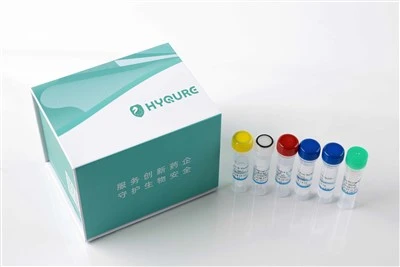
If you’re ready to talk through your specific project, hit us up to connect for a conversation. We’re not just kit suppliers—we’re lab people who’ve been there, tried the wrong protocols, fixed the messy results, and we want to help you do the same. Don’t waste another month troubleshooting with a kit that’s not built for your urine samples—let’s make this work together.
Safety Detection Kits References
- FDA Guidance for Industry: Residual DNA Testing of Therapeutic Protein Products, 2019
- Zhang, Y. et al. Evaluation of qPCR-based residual DNA detection methods for urine samples, Journal of Microbiological Methods, vol. 185, 2021
- Smith, L. et al. Non-invasive fetal DNA quantification in maternal urine using host-specific qPCR kits, Clinical Chemistry and Laboratory Medicine, vol. 59, no. 12, 2021
- WHO Guidelines for the Validation of Residual DNA Assays for Biologics, 2020
- Brown, A. et al. Mitigating PCR inhibitors in urine samples for nucleic acid detection, Analytical Biochemistry, vol. 623, 2022
HyQure Biotech Co., Ltd.
As a professional host cell residual DNA detection kits enterprise in China and Switzerland, we rely on international compliance standards, leverages excellent quality and technical strength. If you have any enquiry about cooperation, please feel free to email us.
Address: Building 18, Lane 2777 East Jinxiu Road, Pudong New Area, Shanghai 2.Stücki Park Hochbergerstr. 60 I, 4057 Basel Switzerland
E-mail: service@hyqure.com
WebSite: https://www.hyqure.com/
