If you’ve ever driven through a suburban neighborhood at dusk, watched a data center hum quietly through the night, or wondered how a small commercial park keeps its lights on through a heatwave, chances are you’ve passed a box type transformer. As a supplier who’s spent the last 12 years troubleshooting, testing, and refining these units for clients across North America and parts of Europe, I can tell you they’re far more than a plain metal box on a concrete pad. Their reliability hinges entirely on rigorous, purpose-built tests that catch flaws long before a unit ever leaves our loading dock. Let me walk you through exactly what those test items are, why they matter, and how we’ve woven them into every unit that ships from our facility. Box Type Transformer
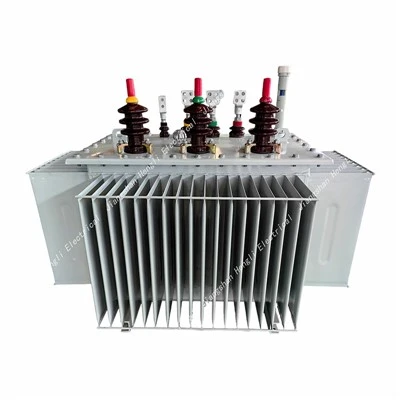
First, let’s set the context. A box type transformer – sometimes called a pad-mounted transformer, compact unit, or package transformer – is a self-contained assembly that houses the core, windings, insulating oil (or gas, for newer dry-type models), bushings, circuit breakers, fuses, and control gear all in one weatherproof, locked enclosure. It steps down high-voltage power from the grid (typically 11kV, 22kV, or 33kV) to low-voltage power that’s safe for homes, businesses, or industrial equipment. The margin for error here is zero: a failure can take a whole neighborhood dark, damage thousands of dollars in equipment, or even pose safety risks for utility workers and the public. That’s why every single unit that leaves our yard goes through a sequence of non-negotiable tests, split into four main categories: routine tests, type tests, special application tests, and factory acceptance tests (FAT) – the final check before a unit heads to a job site.
Let’s start with routine tests, the non-negotiable daily checks that every unit gets, no exceptions. These are the tests that catch minor manufacturing defects that might slip through faster processes, and they take place on our assembly line before a unit is even sealed. The first is the turns ratio test, or TTR test for short. This measures the ratio of the number of turns in the high-voltage winding to the low-voltage winding, to make sure it matches the design specification. A wrong ratio would mean the unit outputs too much or too little voltage – a disaster for sensitive electronics like server hardware or medical equipment. Last year, we caught a discrepancy of just 0.2% in a unit bound for a hospital when we ran this test; a simple rewind fixed it, and we avoided a potential shutdown that could have cost the client millions. This test is done with a precision TTR meter that injects a low-voltage signal into the high side and measures the output on the low side, comparing it to the expected ratio within 0.1% tolerance.
Next in routine testing is the winding resistance measurement. This checks for uneven windings, bad solder joints, or loose connections that would increase electrical resistance, leading to overheating. Think of it like checking the resistance of a garden hose; a kink or a clog increases the pressure needed to push water, and electrical resistance does the same for power. We test each phase of both windings, comparing the readings to the calculated resistance from the design. If a winding has even a hairline crack in its connection, the resistance will jump, and we pull the unit apart to fix it. Last quarter, this test caught a poorly crimped bushing terminal that would have overheated and failed within three months of installation, saving our client from a premature replacement.
Then there’s the insulation resistance test, or IR test. This checks how well the insulating material (either oil-impregnated paper for oil-filled units, or epoxy resin for dry-type units) is holding up, to make sure there’s no moisture, dirt, or contamination that could cause a short circuit. We use a megohmmeter to apply a high DC voltage across the winding and the transformer’s metal tank, measuring how much current leaks through the insulation. A reading below the specified threshold – usually 1000 megohms per kV of rated voltage – means the insulation is compromised. We had a batch of units last spring that sat in a humid warehouse for three days before testing; their IR readings were too low, so we ran a controlled drying cycle, which fixed the issue, rather than scrapping the whole batch. That’s the kind of attention to detail that matters when you’re a supplier clients trust for consistent performance.
Routine testing wraps up with the winding impedance test, also called short-circuit impedance. This measures the impedance between the high and low windings, which tells us about the physical alignment of the core and windings. If the windings are misaligned during assembly, the impedance will be off, which could lead to higher heat generation during normal operation, or even damage during a short circuit. This test is quick – just a few minutes – but it’s critical because misalignment is one of the leading causes of transformer failure in the first five years of service.
Once every unit passes routine tests, we move on to type tests, which are performed on a representative unit from each model series, not every individual unit, but every time we launch a new model or make a major design change. These tests are more intensive, designed to prove that the design can withstand real-world stresses over time. The most well-known type test is the temperature rise test. We place a fully assembled transformer in a climate-controlled test chamber, run it at full rated load for 24 to 48 hours, and use thermocouples to measure the temperature of the windings, core, oil, and enclosure surfaces. The goal is to make sure all components stay below their maximum allowed temperature limits – for example, oil in a standard unit can’t exceed 105 degrees Celsius at full load, and windings can’t exceed 110 degrees. Last year, when we launched a new 2500kVA unit for a large industrial park, the temperature test showed the winding temperature was 10 degrees too high. We went back to the design, adjusted the core size, and re-tested, and now that model is our top-selling unit for heavy-duty applications.
Another key type test is the dielectric withstand test, also called the high-potential test or hipot test. This applies a much higher AC voltage than the unit’s rated voltage across the windings and the enclosure, to make sure the insulation can handle voltage surges – like from lightning strikes or grid switching. For a unit rated at 22kV, we apply 50kV AC for one minute, with no breakdown or flashover allowed. This is a non-negotiable test because a flashover during operation could arc through the insulation, starting a fire or destroying the unit. We also do an impulse test, which simulates a real lightning surge, applying a fast-rising high-voltage pulse to the windings. This is more complex than the hipot test, because it has to replicate the exact shape and speed of a lightning strike, and it checks that the insulation can handle the steep voltage spike without breaking down.
Type tests also include short-circuit withstand testing, which is probably the most physically demanding test we run. We connect the low-voltage terminals of the transformer to a thick copper bus, and apply a controlled short circuit to the high-voltage side, creating a massive surge of current that’s 20 to 25 times the rated current. The unit has to survive this surge without permanent deformation to the core or windings, and keep operating after the short circuit is cleared. Last year, we ran this test on a 1000kVA unit bound for a data center, which has zero tolerance for downtime. The unit passed with no issues, and the client used that test result to get approval for their project, since data centers require proof of short-circuit resilience from all their power equipment.
Moving past routine and type tests, there are special application tests, which we run when a unit is for a specific use case that has extra requirements. For example, if a unit is for an underground parking garage in a coastal city, we run a corrosion test, exposing the enclosure to salt spray for 1000 hours to make sure it doesn’t rust or corrode. For units in seismically active areas, we run a seismic qualification test, mounting the unit on a shake table and subjecting it to vibrations that match earthquake frequencies, to make sure the core and windings don’t shift and cause a failure. We also run noise level tests, which are important for residential areas, where units can’t be louder than 50 decibels at 1 meter – about the volume of a normal conversation. Last year, we had a project for a new suburban development that required a transformer with a noise level under 45 decibels, so we modified the enclosure to add sound-dampening foam and adjusted the core design, and the unit passed with a reading of 42 decibels.
Finally, every single unit goes through a factory acceptance test before it leaves our facility. This is a final, full performance test for the client’s project team, or their third-party inspector, to verify that the unit meets all specifications before installation. We run the unit at 110% of its rated load for four hours, check all temperature readings, measure the output voltage, confirm all control gear and circuit breakers work, and run a final insulation resistance test. We also do a full visual inspection, checking for any dents in the enclosure, loose bolts, or damaged labeling. I always tell our clients that this test is non-negotiable for us, because it’s the last chance to catch anything that’s not right before their team installs it, and avoids costly delays on their end.
As a box type transformer supplier, I’ve learned over the years that testing isn’t just a compliance step – it’s how we build trust with our clients. A transformer is a long-term investment; units we installed 15 years ago are still operating reliably across the Midwest, because we never cut corners on testing. Whether you’re a utility company needing a unit for a new substation, a developer building a shopping center, or a data center operator needing 24/7 power, the test items I’ve walked you through are the reason your transformer will work when you need it most.
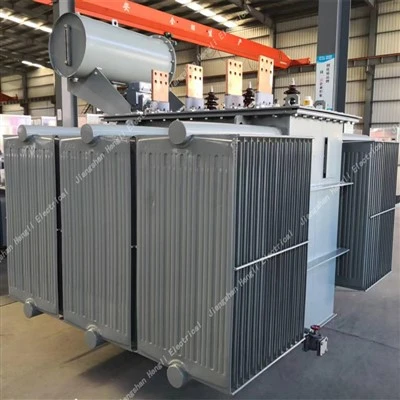
If you’re planning a project and need a box type transformer tailored to your specific load, location, or performance requirements, our team is here to walk you through every step, from design to testing to installation support. We don’t do one-size-fits-all units, because every project has unique needs, and rigorous testing is built into every unit we ship. Reach out to our team to discuss your requirements, and we’ll put together a solution that meets your needs, on time and on budget.
Special Transformer References
International Electrotechnical Commission (IEC) 60076: Power transformers. International Electrotechnical Commission, Geneva.
Institute of Electrical and Electronics Engineers (IEEE) C57.12.00: General requirements for liquid-immersed distribution, power, and regulating transformers. IEEE, New York.
National Electrical Manufacturers Association (NEMA) SG-6: General requirements for dry-type distribution and power transformers. NEMA, Arlington, Virginia.
Zhejiang Jiangshan Hengli Electrical Co., Ltd.
Zhejiang Jiangshan Hengli Electrical Co., Ltd. is one of the most professional box type transformer manufacturers and suppliers in China, featured by quality products and low price. Please rest assured to wholesale cheap box type transformer in stock here and get pricelist from our factory. Customized orders are welcome.
Address: 212 Fuzhu Street Sidu Town, Jiangshan, Zhejiang, China
E-mail: henglijs@foxmail.com
WebSite: https://www.henlypower.com/
