If you’ve ever spent time on a mine site, you know that every minute of downtime costs real money. For operators tasked with keeping ore processing lines, conveyor systems, and material handling workflows running, automatic feeding machines aren’t just convenience upgrades—they’re critical to reducing waste, cutting labor costs, and maintaining consistent production output. As a supplier who’s worked with mines across North America, Australia, and parts of South America over the past 12 years, I’ve seen firsthand how a machine that’s ill-suited for a mine’s specific conditions causes more headaches than it solves. Today, I’m breaking down the non-negotiable requirements any mining site must meet before investing in an automatic feeding machine—from site-specific needs to operational protocols. Automatic Feeding Machine
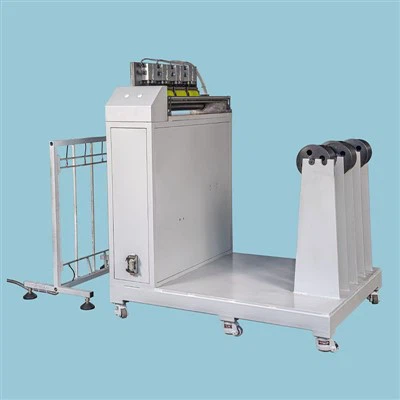
First, let’s get one thing straight: not all automatic feeding machines are built for mining. The ones that work for a small aggregate quarry aren’t going to hold up in a large copper mine with heavy, abrasive ore, and a machine built for grain processing will struggle with wet, sticky clay common in gold mining operations. That’s why the first and most foundational requirement is a detailed site assessment tailored to your mine’s unique conditions. As someone who’s walked mine sites with geologists, maintenance teams, and plant managers, I can tell you that a generic sales pitch never accounts for variables like ore hardness, moisture content, and material size—all of which dictate what kind of feeding machine you need.
Let’s start with material characteristics, because this is where 70% of failed feeding machine deployments go wrong. Mines deal with wildly different materials every day: hard rock (like granite or iron ore), soft clay, fine dust, and even semi-liquid slurry in some processing plants. For a machine to work, it has to handle your material’s specific physical properties. For example, if your primary material is highly abrasive (like silica or quartz ore), the feeding machine’s contact surfaces—chutes, belts, or vibratory pans—need to be lined with high-wear materials, like chromium carbide or hardened steel, that can withstand constant abrasion. I once worked with a coal mine that tried to use a standard vibratory feeder with mild steel liners; within six months, the liners were worn through, forcing a 3-day shutdown to replace parts. Now, that same mine works with us to design feeders with replaceable carbide liners that last 2–3 times longer.
Moisture is another material variable that trips mines up. If your ore has high moisture content (common in underground mines where water seepage is an issue), it can clump together, stick to surfaces, and jam a feeding machine. I remember a gold mine in Nevada that struggled with sticky clay and fine gold ore—their old feeder would get clogged every time humidity spiked in the rainy season, stopping production for hours. We had to adjust the feeder’s vibration frequency and add an integrated air blow-off system to dislodge clumps, which cut clog-related downtime by 90% in the first quarter. No off-the-shelf machine has that; it had to be custom-designed based on their site’s moisture levels and material stickiness. Material size matters too: if you’re feeding large, boulder-sized ore (up to 1 meter across), you can’t use a small belt feeder—you need a heavy-duty vibratory feeder or apron feeder with reinforced supports to handle the impact.
Next, environmental and site infrastructure requirements that are often overlooked during the buying process. Mining sites are brutal environments: extreme temperatures (from -40°F in Canadian Arctic mines to 120°F in Australian outback operations), high levels of dust and explosive fumes, and limited power access in remote locations. Your automatic feeding machine has to be rated for these conditions, and that starts with explosion protection if your site handles flammable materials like coal or natural gas. In those cases, the machine needs to be intrinsically safe, with components that won’t spark if they malfunction. I once had a client in a coal mine that tried to use a standard control panel from a commercial supplier—within a month, dust had gotten into the electrical connections and caused a minor spark, triggering a safety alarm. Now, all our explosion-proof models use sealed, NEMA 7-rated components that keep dust and gas out.
Power is another big one. Most mines rely on grid power, but many remote operations use solar or diesel generators, which can have inconsistent voltage. If your feeding machine isn’t equipped with a variable frequency drive (VFD) that can adjust to voltage fluctuations, it’ll either underperform or get damaged. We add VFDs to every model we sell to mines, because they let operators adjust feed rates to match the processing plant’s needs—no more overfeeding that clogs crushers or underfeeding that slows production. Also, consider the machine’s footprint and connection to existing infrastructure. Can you fit the feeder between your primary crusher and processing plant? Does it need to connect to your site’s PLC (programmable logic controller) system to sync with other equipment? If the feeder is too heavy, you might need to reinforce the concrete foundation it sits on—something that’s easy to miss until delivery day. I had a client in Peru that ordered a large apron feeder without checking the foundation; we had to bring in a crane and add steel supports to the foundation after delivery, delaying installation by two weeks and costing them extra. That’s why we always include a site survey as part of our initial consultation, not just a sales pitch.
Then there are operational and personnel requirements. Automatic feeding machines reduce manual labor, but they still need trained staff to operate and maintain them. A common mistake mines make is buying a machine that’s too complex for their maintenance team to service quickly, especially in remote locations where spare parts can take days to arrive. That’s why we design our feeders with modular components—wear parts like liners, belts, or bearings are easy to replace in 30 minutes or less, no specialized tools needed. We also provide on-site training for at least two maintenance technicians and one operator per mine, because if something goes wrong, you don’t want to wait for a technician from the supplier to fly in. Safety is non-negotiable here too: mining sites have strict safety protocols, so the feeder needs to be equipped with emergency stop buttons that are accessible from multiple points, guarding for moving parts, and interlocks that shut the machine down if a guard is opened. I once worked with a mine that skipped the guarding on a feeder—an operator tried to clear a clog while the machine was running and got injured. That’s a failure of both the machine design and the mine’s safety checks, which is why we include all OSHA-aligned safety features as standard for mining models.
Wait, there’s also integration with the mine’s data and monitoring systems. Modern mines are moving toward autonomous operations, and feeding machines play a key role in that. If your mine is using a central monitoring system to track production rates, crusher performance, and energy use, your automatic feeding machine needs to be able to transmit real-time data—like feed rate, load on the machine, and maintenance alerts—to that system. That’s not a nice-to-have anymore; it’s a requirement for staying competitive. We now include IoT (Internet of Things) connectivity in all our mining feeders, which lets clients monitor performance from their control room, predict wear on parts before they fail, and adjust feed rates remotely. A copper mine in Chile told us that since adding the IoT module, they’ve reduced unplanned downtime related to feeder issues by 40% because they can catch a bearing going bad before it seizes.
I’ll be honest: there’s no one-size-fits-all automatic feeding machine for mining. Every site’s materials, environment, and operational needs are unique, and cutting corners on the requirements I’ve outlined will only lead to higher costs, more downtime, and safety risks. As a supplier, our job isn’t just to sell you a machine—it’s to work with you to assess your site, design a feeder that meets all your needs, and support you through installation, training, and ongoing maintenance.

If you’re ready to stop dealing with clogging feeders, unexpected downtime, or machines that don’t integrate with your operations, reach out to us to discuss your specific mining needs. We’ll send a team to your site to do a detailed assessment, walk through material samples, and show you how our automatic feeding solutions can fit your workflow.
Fin Press Machine References:
- Mine Safety and Health Administration (MSHA). 2022. Machinery Safety Standards for Mining Operations. U.S. Department of Labor.
- International Society of Automation (ISA). 2021. Process Automation Requirements for Mineral Processing Plants. ISA-95.00.02 Standard.
- Wear Technology for Mining Equipment. 2020. Journal of Mine Operations Engineering, Vol. 15, No. 2, pp. 45–58.
- Remote Operations in Mining: Best Practices. 2021. International Council on Mining and Metals (ICMM) Report.
- Automatic Feeding Systems for Abrasive Materials. 2019. Minerals & Metallurgical Processing Journal, Vol. 36, No. 4, pp. 198–205.
Suichang Lvye Machinery Co., Ltd.
We are one of the most professional automatic feeding machine manufacturers in China, also support customized service with low price. We warmly welcome you to buy discount automatic feeding machine for sale here from our factory. If you have any enquiry about quotation, please feel free to email us.
Address: No. 402, Mudanting East Road, Miaogao Street, Suichang County, Lishui City, Zhejiang Province
E-mail: L528753@outlook.com
WebSite: https://www.suichanglvye.com/
